
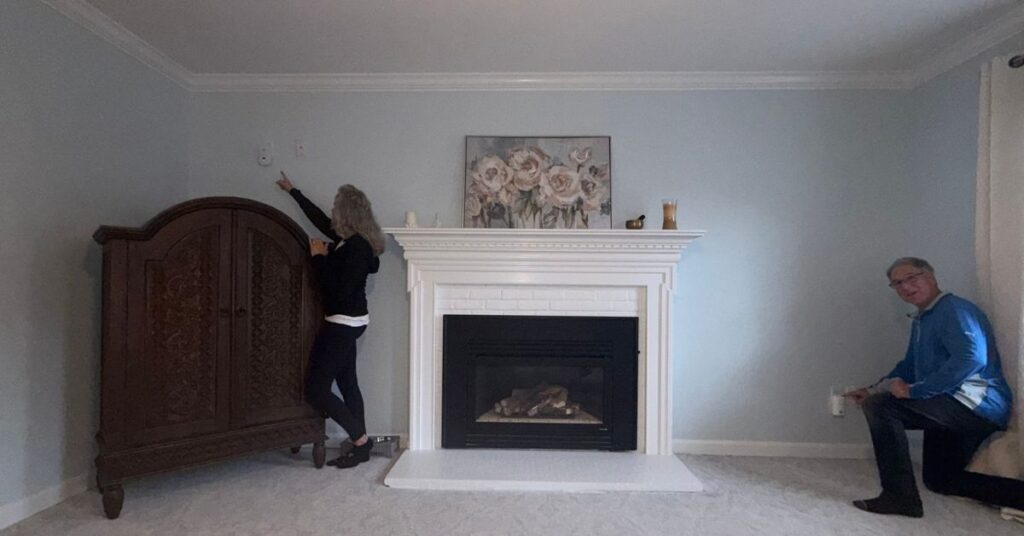
Natural gas rises, so the fuel-gas detector Pam is pointing to is mounted high for natural-gas detection. The CO alarm I am pointing to is a plug-in model, placed according to its instructions. Propane behaves differently: it is heavier than air, so a detector intended to detect propane is placed low.
Smoke, carbon monoxide and fuel gas are three different hazards. Here is how to tell which ones the alarms in your home can detect, and what to do if you find a gap.
Most homeowners know they need smoke alarms. Far fewer can say, with confidence, whether their home also needs carbon-monoxide alarms, or whether the device on the hallway ceiling can detect a gas leak at all.
After nearly forty years of walking Connecticut homes, I can tell you that every REALTOR I know has opened a front door and been surprised by what was missing: no CO alarm, too few smoke alarms, or one detector expected to protect an entire house.
It happened again during a recent sale. The house had no carbon-monoxide alarms and only one smoke alarm. I knew before closing, bought the additional alarms that were needed, and that was that. No drama. Just one more responsibility handled before ownership changed hands.
But it raised the question every homeowner should be able to answer:
Which hazards can the alarms in your home detect, and which ones could they miss?
A smoke alarm detects smoke. It does not necessarily detect carbon monoxide, and neither one warns you about leaking natural gas or propane unless the device is specifically designed and labeled to do so.
Three hazards, three different questions
The word “alarm” makes these devices sound interchangeable. They are not. What matters is the label on the device and where it is placed.
| Hazard | What the device is meant to detect | The question to ask |
|---|---|---|
|
Smoke |
Particles produced by a fire |
Do we have working smoke alarms in the recommended locations? |
|
Carbon monoxide |
An invisible, odorless gas produced when fuels burn |
Do we have a CO alarm near each sleeping area, and does its label confirm CO detection? |
|
Fuel gas |
A buildup of the gas named on the detector label, such as natural gas or propane |
If the home uses fuel gas, does the device specifically list the gas we want it to detect? |
Smoke alarms protect through coverage
A single smoke alarm is not a whole-home system. The U.S. Fire Administration recommends alarms inside every bedroom, outside each separate sleeping area and on every level of the home, including the basement. Interconnected alarms add another layer: when one sounds, they all sound. USFA also advises testing monthly and replacing alarms ten years after the manufacture date.
The National Fire Protection Association puts it in numbers: smoke alarms cut the risk of dying in a home fire in half.
Carbon monoxide cannot be seen or smelled
Carbon monoxide can build up whenever fuel-burning equipment, fireplaces, vehicles or generators are in use. A smoke alarm does not detect it unless the product is clearly labeled as a combination smoke and CO alarm.
The Centers for Disease Control and Prevention recommends a CO detector near every sleeping area and annual service for fuel-burning heating systems and appliances. NFPA guidance also calls for CO alarms on every level of the home. And contrary to a common belief, CO alarms do not universally belong near the floor; plug-in and wall-mounted locations can both be appropriate. Follow the alarm instructions and local requirements for exact placement.
Connecticut law reflects the same distinction at the closing table. At covered Connecticut closings for one- or two-family homes and units in common-interest communities, the seller must provide an affidavit addressing smoke and carbon-monoxide detection equipment. For CO, the affidavit may instead state that the home has no fuel-burning appliance, fireplace, or attached garage.
Fuel gas is a different warning again
A carbon-monoxide alarm and a combustible-gas alarm are not the same device. A gas detector must be designed and labeled for the fuel it is expected to detect, and where you mount it depends on how that fuel behaves:
- Natural gas is lighter than air. A detector intended to detect a natural-gas leak is mounted high.
- Propane is heavier than air. It collects low, so a detector intended to detect propane is mounted near the floor.
Why does a gas detector matter if utilities add that familiar rotten-egg odor? Brian put it plainly:
Here is the detail that surprised us. When Pam and I shopped, we did not find a separate propane-only detector at our local home center. The Kidde detector we chose is labeled for explosive gas, meaning both natural gas and propane. That makes the decision simpler, not harder: one device, positioned for the fuel your home actually uses, exactly as the manufacturer’s instructions describe. Our home runs on natural gas, so ours is mounted high.
Here is the detail that surprised us. When Pam and I shopped, we did not find a separate propane-only detector at our local home center. The Kidde detector we chose is labeled for explosive gas, meaning both natural gas and propane. That makes the decision simpler, not harder: one device, positioned for the fuel your home actually uses, exactly as the manufacturer’s instructions describe. Our home runs on natural gas, so ours is mounted high.
Take the five-minute alarm walk
This is the one thing we hope you do this week. Walk the house once, with a notepad:
- Find every alarm. Check bedrooms, hallways, each floor and the basement.
- Read the label. Write down whether each device detects smoke, carbon monoxide, fuel gas or a combination.
- Check the date. Look for the manufacture or replacement date and follow the maker’s replacement instructions.
- Test it correctly. Use the test method in the product instructions. Never use a flame or exhaust to test an alarm.
- Look for gaps. If coverage is unclear, ask your local fire marshal, the alarm manufacturer or a qualified professional.
Your notes will tell you what you already have, what is missing and, just as important, what you do not need.
If your walk found a gap: what we chose for our own home
Our own walk turned up three needs: fuel-gas detection, dedicated CO alarms and dependable smoke coverage. These are the three devices we chose, all from Kidde, one of the most established names in home fire and CO safety. Each answers one question; none tries to answer all three. Whatever you choose, the instructions in the box decide where it goes and how it is maintained.
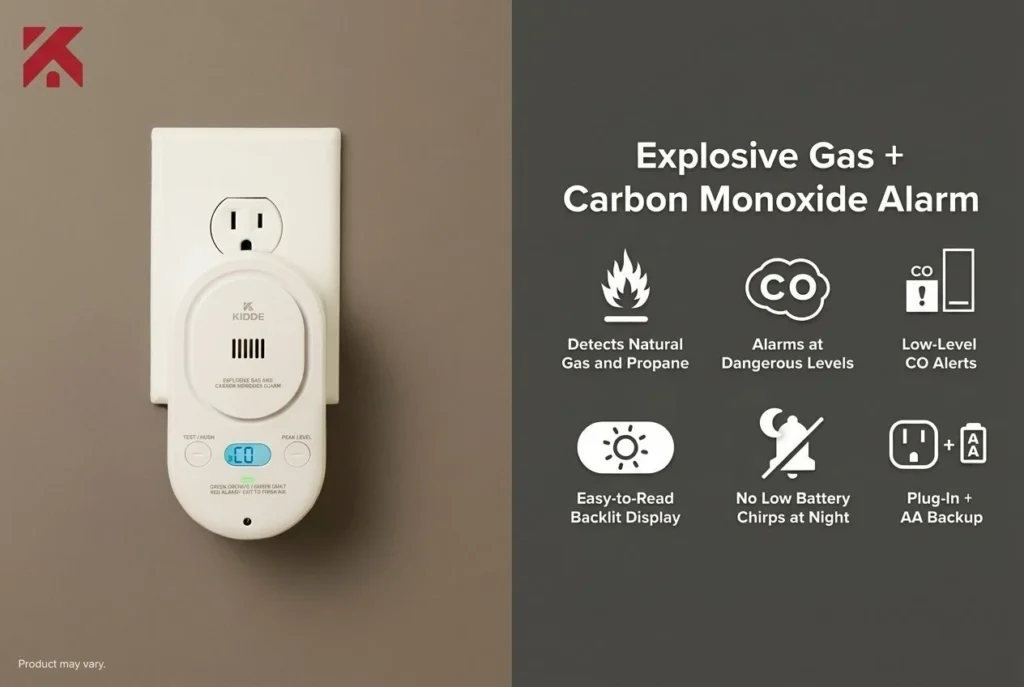
This is the device Pam is pointing to in the photo above. It detects carbon monoxide, natural gas and propane, and it adds low-level CO alerts, which Kidde designed with young children, older adults and pets in mind. It plugs into a standard outlet, two AA batteries keep it working during an outage, and a removable plug and cord let you mount it on the wall wherever your fuel calls for it.
From Kidde’s guidance for this model:
- Natural gas rises, so Kidde suggests mounting about 12 inches from the ceiling. Propane sinks, so mount about 12 inches from the floor.
- Install one on each level, ideally on levels with fuel-burning appliances, and outside sleeping areas. Keep it at least 3 feet from the door of a bathroom with a tub or shower, and away from forced-air ducts, ceiling fans and very humid spots.
- Fresh AA backup batteries last at least a year. Use the battery types listed in the guide, not lithium. The alarm signals that it needs replacing 7 years after it is first powered.
Best for: homes that burn natural gas or propane.

This is the alarm I am pointing to in the photo above. It plugs into a standard outlet, two AA batteries back it up during an outage, and its plug rotates to fit vertical or horizontal outlets. What sets it apart is the Kidde app: over 2.4 GHz Wi-Fi it sends CO alerts to your phone whether you are home or away, with no subscription, and it works with Alexa and Google Home.
For an intergenerational family, that is the real value. A son or daughter can know right away if CO is detected in a parent’s home, even from miles away. Note that this alarm detects carbon monoxide only, not smoke or fuel gas.
Placement: it shares Kidde’s plug-in CO guide with the COPDLG. Install one on each level and outside sleeping areas, keep it at least 3 feet from the door of a bathroom with a tub or shower, and keep it away from forced-air ducts and fans. Test and replace it as the guide directs.
Best for: CO coverage on each level, and families who want an alert on their phone, including for a parent living independently.
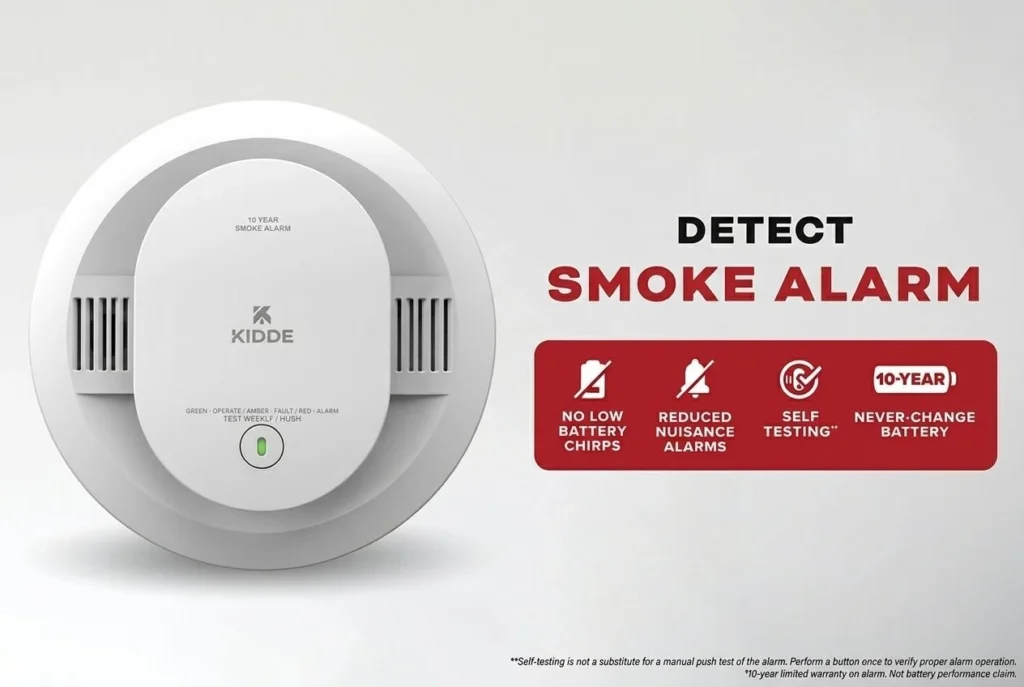
Brian chose this one to hold for our photo, which tells you something. Its built-in 10-year battery means no battery changes and no low-battery chirps; when the decade is up, the alarm beeps to tell you to replace the whole unit. Kidde’s sensing technology is designed to tell real smoke from everyday cooking and steam, which matters more than it sounds: an alarm that sounds every time someone sears a steak is an alarm someone eventually disconnects.
Best for: filling smoke-alarm gaps: inside each bedroom, outside each sleeping area and on every level, including the basement.

Brian Johnson of Huntington Home Inspection LLC, a 20-year veteran of the Stratford, CT Fire Department, with the Kidde Detect smoke alarm.
Keeping them working: Brian's maintenance rules
A detector is only as good as its last test. These are the general guidelines Brian shared with us. Where your model’s instructions are more specific, such as the seven-year replacement signal on the Kidde gas alarm or the sealed battery in the smoke alarm above, follow the instructions.
| Device | Brian's guidance |
|---|---|
|
Smoke alarms |
Replace all smoke alarms after 10 years. |
|
CO alarms |
Generally last about 5 to 10 years depending on the model. Replace according to the manufacturer’s instructions; many chirp or show an end-of-life signal when it is time. |
|
Combustible gas detectors |
Typically a shorter sensor life, often around 5 years. Check the replacement date printed on the unit. |
|
Batteries |
Change every six months (an easy reminder is when the clocks change), and at minimum once a year. Sealed 10-year lithium units need no battery changes; the whole alarm is replaced when it expires. Hardwired alarms still have backup batteries that need the same attention. |
|
Testing |
Test every detector at least once a month by pressing its test button. |
|
Chirping |
A trouble chirp usually means a low battery; replace it. If an alarm keeps sounding, call the fire department. |
If a CO or gas alarm goes off
Get everyone outside right away and call 911 or your gas utility from a safe location.
The GenTree Living takeaway
You do not need to become an alarm expert. You only need to know that the alarms in your home are designed to detect the hazards you expect them to. Smoke, carbon monoxide and fuel gas each deserve their own answer, and the five-minute alarm walk is where that answer starts.
And if the walk has you wondering what else your home might be telling you, our Property Intelligence Report™ takes the same calm, room-by-room approach to the whole house. It is available for $149 at GenTree Home.
ABOUT OUR CONTRIBUTOR
Brian Johnson
Huntington Home Inspection LLC · 20-year veteran of the Stratford, CT Fire Department
Brian brings twenty years of fire service experience to his work as a home inspector. If you’re buying, selling or simply want a professional look at your home, he is a call worth making.
Call Huntington Home Inspection: 203-305-3699
Affiliate disclosure: Some links above are affiliate links. If you buy through them, GenTree Living may earn a commission at no extra cost to you. As an Amazon Associate I earn from qualifying purchases. We only feature products that meet our standards for quality and usefulness.
Editorial note: This article provides general awareness, not inspection, installation or legal advice. Product placement and replacement intervals must follow the device instructions and local requirements. If you are unsure about your home’s coverage, consult your local fire marshal, the alarm manufacturer or a qualified professional.
Sources
- S. Fire Administration, Smoke Alarms
- Centers for Disease Control and Prevention, Carbon Monoxide Poisoning Basics
- National Fire Protection Association, Smoke Alarms
- National Fire Protection Association, Carbon Monoxide Safety
- NFPA, Residential Fuel Gas Alarms and NFPA 715
- S. Consumer Product Safety Commission, Carbon Monoxide Fact Sheet
- Connecticut PURA, What To Do If You Smell Natural Gas
- Connecticut PURA, What To Do If You Smell Propane Gas
- Connecticut General Statutes Section 29-453
- CGA Office of Legislative Research, Smoke and Carbon Monoxide Detector Disclosure Law (2024-R-0133)
- Kidde, Explosive Gas & Carbon Monoxide Alarm (COPDLG) product page
- Kidde, AC Plug-In Carbon Monoxide Alarms user guide (COP, COPD, COPDLG, COPDW)
- Kidde, Detect 10-Year Battery Smoke Alarm (20SD10) product page