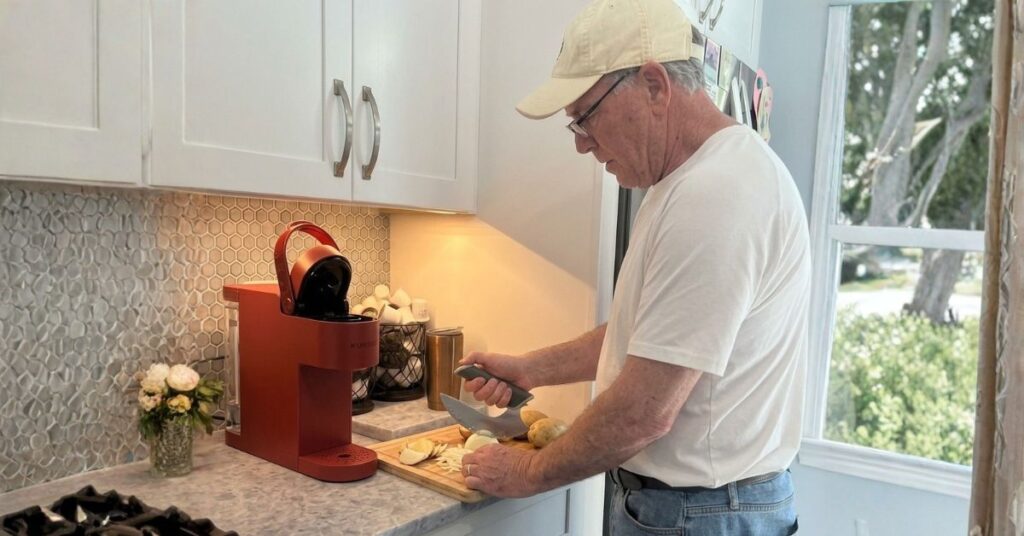
A knife can be sharp and still be the wrong fit for the person using it.
A kitchen tool earns its place through the everyday work it helps someone do.
We often evaluate a knife by the sharpness of its blade. But sharpness is only one part of the experience.
The handle, weight, balance, required movement, work surface and storage location can all influence whether someone continues reaching for a tool—or quietly begins avoiding the task.
Before deciding what to replace, look at the whole routine.
Begin with something familiar
Choose a meal you already know how to prepare.
Do not begin by asking whether you need a new knife. Begin by noticing the routine surrounding the one you already use.
Where does the effort begin?
It may happen while cutting, but it may begin earlier:
Retrieving a heavy cutting board
Reaching into a high cabinet
Carrying ingredients across the kitchen
Clearing enough counter space
Opening packaging
Holding an item steady while preparing it
The cutting tool may be only one part of the experience.
Consider the tool and the person together
A familiar tool may still work while no longer fitting the person using it as well as it once did.
Consider:
Does the handle feel comfortable to hold?
Can the tool be controlled without excessive squeezing?
Does its weight feel manageable throughout the task?
Does the balance support the intended movement?
Does the tool remain comfortable as the task continues?
Can it be cleaned and put away without creating another difficult step?
There is no single handle, weight or knife design that will be best for everyone.
Hands differ. Routines differ. Kitchens differ.
The useful question is not, “Is this the best knife?”
It is:
Does this tool support this person during this particular task?
If an unfamiliar tool feels uncomfortable or difficult to control, stop using it and reconsider the tool or setup. Read and follow the maker’s instructions before trying a different design.
Include the Counter, Cleanup and Storage
Tool fit does not end when the cutting is finished.
A useful tool also needs a practical place to be used, cleaned and stored.
Notice:
Is there adequate light over the work area?
Is there enough uncluttered counter space?
Does the cutting surface remain stable?
Are frequently used ingredients and tools within comfortable reach?
Can the tool be washed and dried without unnecessary difficulty?
Does it have a secure and convenient storage location?
Sometimes the most helpful change is not purchasing something new.
Moving a frequently used item, improving the lighting or creating a clear work area may make the entire routine feel more manageable.
What Nulu Changes
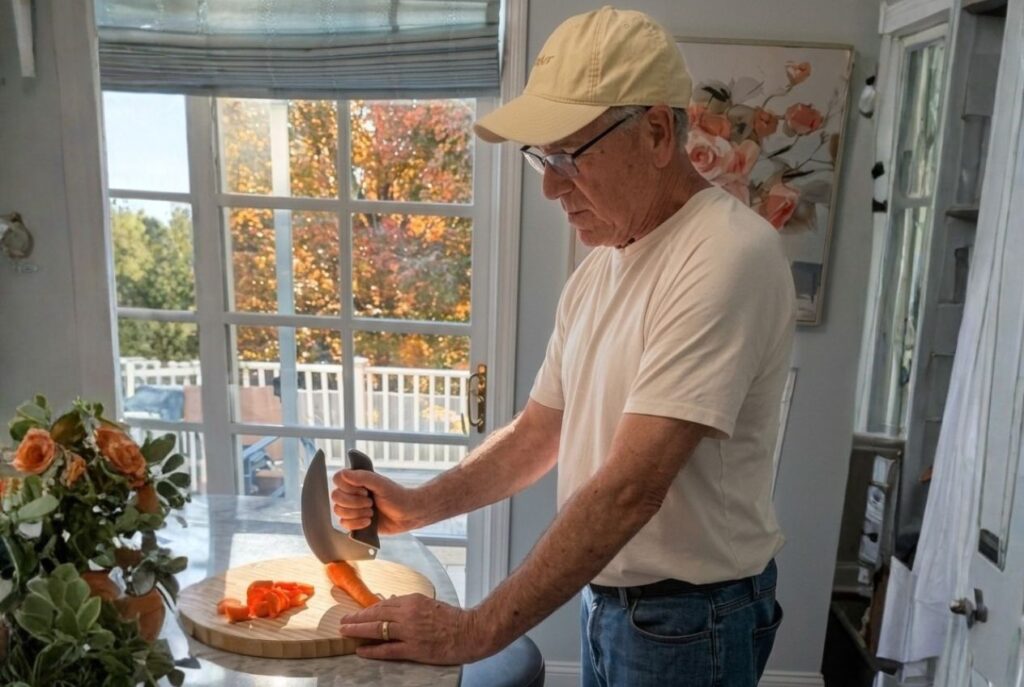
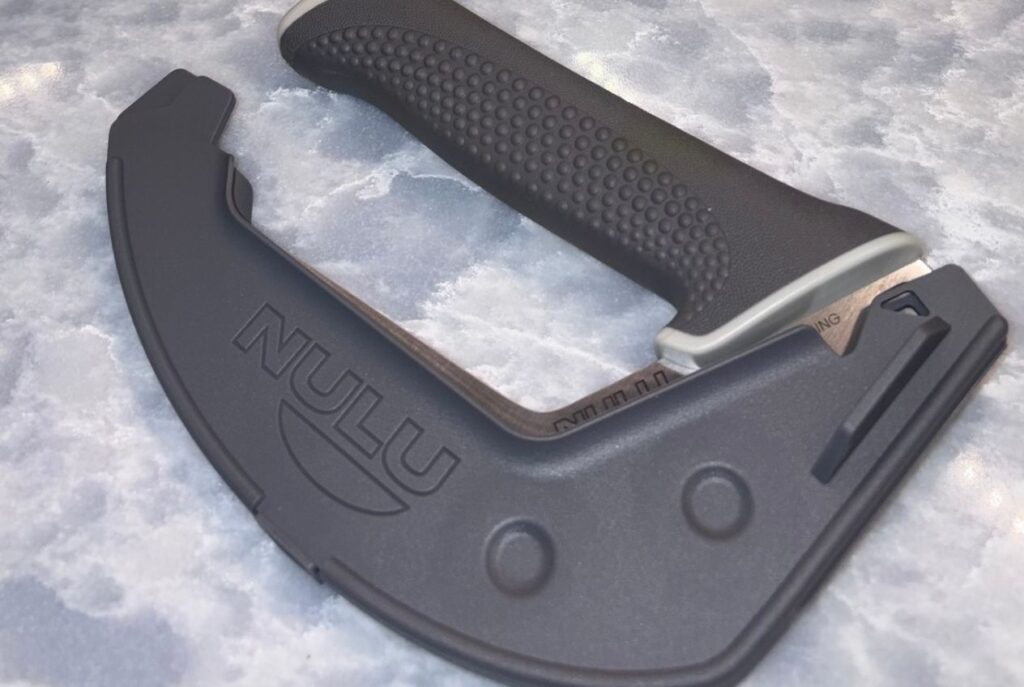
NULU takes a visibly different approach to the familiar kitchen knife.
Its handle is positioned above a curved cutting arc rather than extending from one end of a straight blade.
According to NULU, the knife uses one continuous blade with three cutting areas and provides four possible grip positions. A protective sheath is included. A dock, cutting board, sharpener and other accompanying products may be purchased separately or included in selected bundles.
The idea began with NULU co-founder Doug Katz.
According to the company’s account, traditional kitchen knives became increasingly difficult for Doug to use as pain and upper-body mobility challenges affected his cooking. His Army career was part of the physical history behind that experience.
Doug began exploring a different approach and worked with designer Gordon Downey to refine the knife.
That background makes the design worth understanding. It does not establish that the knife will feel comfortable, manageable or appropriate for every person.
These are design choices—not guarantees.
What Nulu Changes
The next time you prepare a familiar meal, ask:
| Before the task | During the task | After the task |
|---|---|---|
|
Can I retrieve everything comfortably? |
Does the tool feel controlled? |
Can I clean and dry the tool comfortably? |
|
Is the work area clear and well lit? |
Do its weight and balance support the movement? |
Does it have a secure storage location? |
|
Is the cutting surface stable? |
Am I squeezing, reaching or compensating more than necessary? |
Will I be comfortable retrieving it the next time? |
One honest observation is enough to begin.
You may decide to care for an existing tool, change where something is stored, reorganize the counter or consider a different design.
The goal is not to replace every familiar kitchen tool.
It is to preserve the routines that allow people to prepare food, care for themselves and contribute to the family table.
ONE OBSERVATION TO CARRY FORWARD
Choose one kitchen routine this week.
Notice where it remains comfortable and where it has started asking for more effort.
Do not assume that buying something new is the answer. Begin with the routine, consider the person using the tool and make the next decision from there.
That is how awareness becomes a practical next step.
If the NULU approach interests you, you can review the knife, accessories and available bundles through GenTree Home.
Disclosure: GenTree Home has a retail relationship with NULU through Shopify Collective and may earn revenue from purchases. This article introduces the company’s design and background; it does not provide a firsthand product recommendation or claim that the knife is suitable for every person.