How to read the signs of a damp basement or crawl space, size a dehumidifier honestly, and know when the job belongs to a professional
By John McBride | GenTree Living
Affiliate Disclosure: Some links in this article are affiliate links. GenTree Living may earn a commission if you purchase through them, at no additional cost to you. These products are sold and shipped by AlorAir, not by GenTree Home.
How we chose: This is a researched buying guide, not a hands-on product review. We have not tested these dehumidifiers. Capacity and coverage figures below come from AlorAir’s own product pages. The Monroe house story below is from John’s real estate work; it is not a review of any AlorAir model.
Most people never go into their crawl space, and many only visit the basement to change a filter or find the holiday boxes. That is exactly why moisture down there tends to go unnoticed until it shows up somewhere else.
In nearly forty years of walking through Connecticut homes, I have learned to pay attention to the lower level. A musty smell at the top of the basement stairs, a damp cardboard box, or a white crust on a foundation wall tells you something about how the house is living. None of it is a reason to panic. It is a reason to look a little closer.
What a Monroe House Taught Me
Earlier this year, I was involved in the sale of a home in Monroe, Connecticut. The basement had two sump pumps, both with battery backups—a clear sign that groundwater and a high water table had been taken seriously. It also had a good dehumidifier running consistently.
What surprised me was the contrast between the basement and the main level.
The home had no central air conditioning and was surrounded by mature trees. During a hot, humid summer, limited airflow contributed to mold developing inside several main-level closets. Yet the basement—the area most people would have expected to have the greater moisture problem—had no visible mold.
The sump pumps helped manage incoming water. The dehumidifier addressed something different: moisture carried in the air. Together, they helped keep the basement environment under control.
That house reminded me that basements and crawl spaces do not need an active leak to have a moisture problem. Humid air can settle into these cooler, enclosed spaces and create conditions where musty odors, damp materials, and mold may develop. A properly sized and maintained dehumidifier cannot correct drainage problems or replace needed repairs, but it can be an important part of protecting the space—and the home above it.
One more note from that sale: those battery backups mattered. When the power goes out, a sump pump that depends on household current stops working, which is why many homeowners pair pumps with a battery backup or a portable power station. Our guide to backup power for aging in place walks through that choice.
Why the lower level matters for staying in your home
Here in the Northeast, humid summers, wet springs, older stone and block foundations, and homes built into hillsides all make below-grade moisture common. Damp air in a basement or crawl space does not stay put. It can affect how the rest of the house smells and feels, and persistent dampness raises the risk of mold, wood rot, and pest activity in those spaces.
For people who plan to stay in their home for the long run, a drier lower level is part of quiet maintenance. It protects stored belongings, the framing that holds up the floors, and the mechanical equipment that often lives down there. It also means fewer surprises later.
What to notice first
Before thinking about any equipment, take a slow walk through the space with a flashlight. Signs worth noting include:
- A musty or earthy smell that lingers
- Condensation on cold water pipes, ductwork, or windows
- White, chalky deposits (efflorescence) on concrete or block walls
- Rust on tools, appliance feet, or the water heater base
- Damp or sagging insulation between floor joists in a crawl space
- Visible mold spots on wood, drywall, or stored items
An inexpensive hygrometer, a small humidity gauge, makes this less of a guessing game. The U.S. Environmental Protection Agency advises keeping indoor relative humidity below 60 percent, and ideally between 30 and 50 percent when possible. If your lower level regularly reads well above that range, a dehumidifier is worth considering.
When to call a professional first
A dehumidifier manages damp air. It does not fix water that is coming in. Before buying one, consider bringing in a qualified professional, such as a waterproofing contractor, home inspector, or structural engineer, if you see:
- Standing water, or water that appears after every heavy rain
- Cracks in the foundation that are widening, leaking, or uneven
- Soft, crumbling, or sagging floor joists or sill plates
- Widespread mold growth rather than a few spots
- A crawl space with bare dirt and no vapor barrier
Often the first fixes are outside: gutters that overflow, downspouts that empty against the foundation, or soil that slopes toward the house. Those are worth checking before anything else. A dehumidifier works best once the water source is handled and the space is reasonably sealed.
How to size a crawl space or basement dehumidifier
Sizing comes down to four questions.
1. How large is the space? Measure length times width for the area the unit needs to cover. Manufacturers list coverage in square feet, and those numbers assume a reasonably enclosed space.
2. How damp is it? A space that is merely musty needs less capacity than one with constant condensation. If yours is on the damp end, many installers suggest choosing the next size up rather than running a smaller unit nonstop.
3. Where will the water go? This matters more than most people expect. A gravity drain unit lets water run through a hose to a floor drain or sump that sits lower than the unit. If there is no drain lower than the unit, or water has to travel up and out, you need a model with a built-in condensate pump. Crawl spaces usually fall into the second group.
4. Do you want remote monitoring? WiFi models let you check humidity from your phone. That can be helpful for a crawl space you rarely enter, or for an adult child keeping an eye on a parent’s home. It is optional. A non-WiFi unit with a built-in humidity control does the same core job.
One more point on reading spec sheets: you will often see two capacity numbers. The AHAM figure is measured under standard test conditions. The larger “saturation” figure reflects very humid conditions. Compare models using the AHAM number.
Three sizes worth considering
We looked at AlorAir’s Sentinel line because it is built for crawl spaces and basements, it comes in clear size steps, and it offers both pump and gravity-drain versions. The figures below are AlorAir’s. Prices change often, so check the current price on the product page.
Smaller spaces with no floor drain: Sentinel HD35P with pump
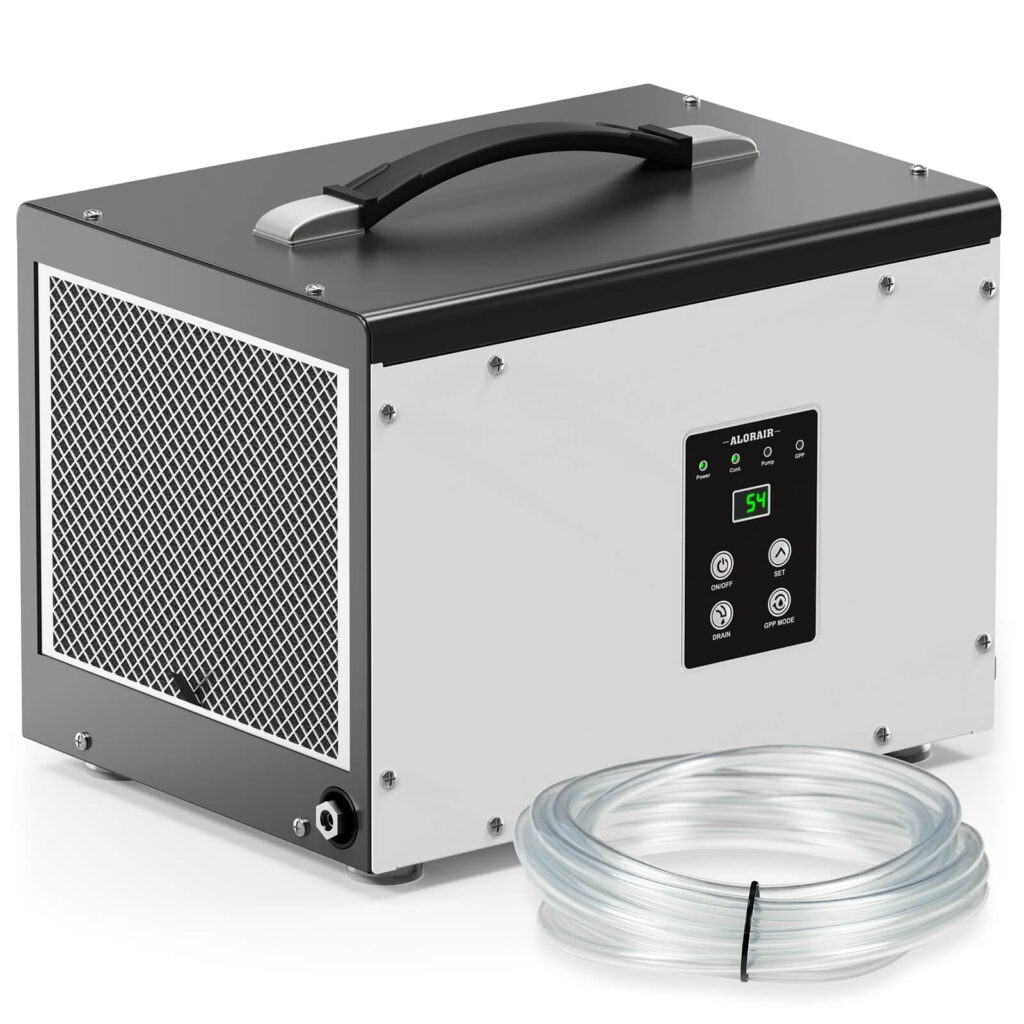
AlorAir rates the HD35P for spaces up to about 1,000 square feet, at 35 pints per day (AHAM). Its built-in condensate pump makes it a practical fit for a crawl space where water has to be pumped up and out. It is not a WiFi model. For many smaller crawl spaces and modest basements, this is a sensible place to start. This model was out of stock when we checked on November 18, 2026; confirm current availability on the product page.
Check current price on the AlorAir Sentinel HD35P with pump
Mid-size spaces with a floor drain: Sentinel HD55S (Gold)
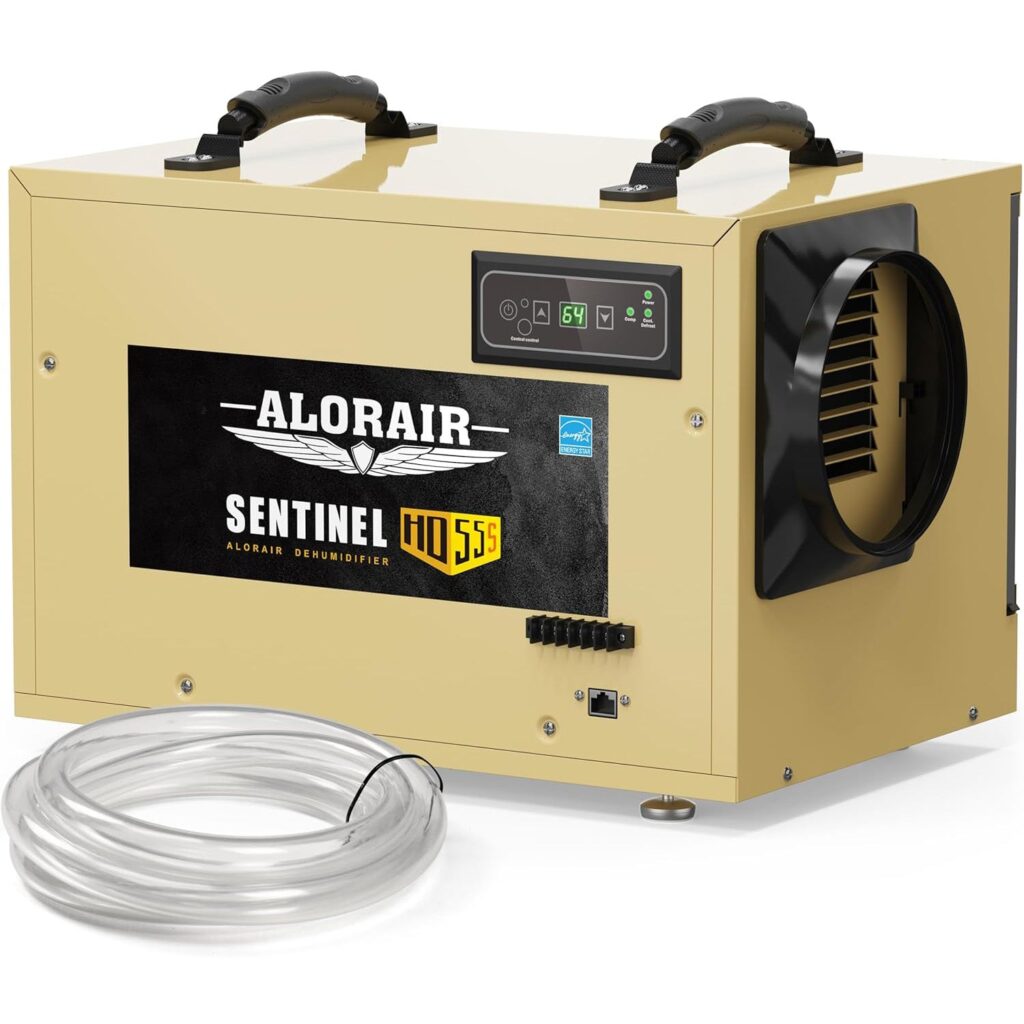
AlorAir rates the HD55S Gold for spaces up to about 1,300 square feet, at 55 pints per day (AHAM). This version uses a gravity drain, so it suits a basement or crawl space with a floor drain or sump lower than the unit. It does not include a pump, and it is not a WiFi model.
Check current price on the AlorAir Sentinel HD55S Gold
Prefer phone monitoring? Sentinel HD55S White WiFi
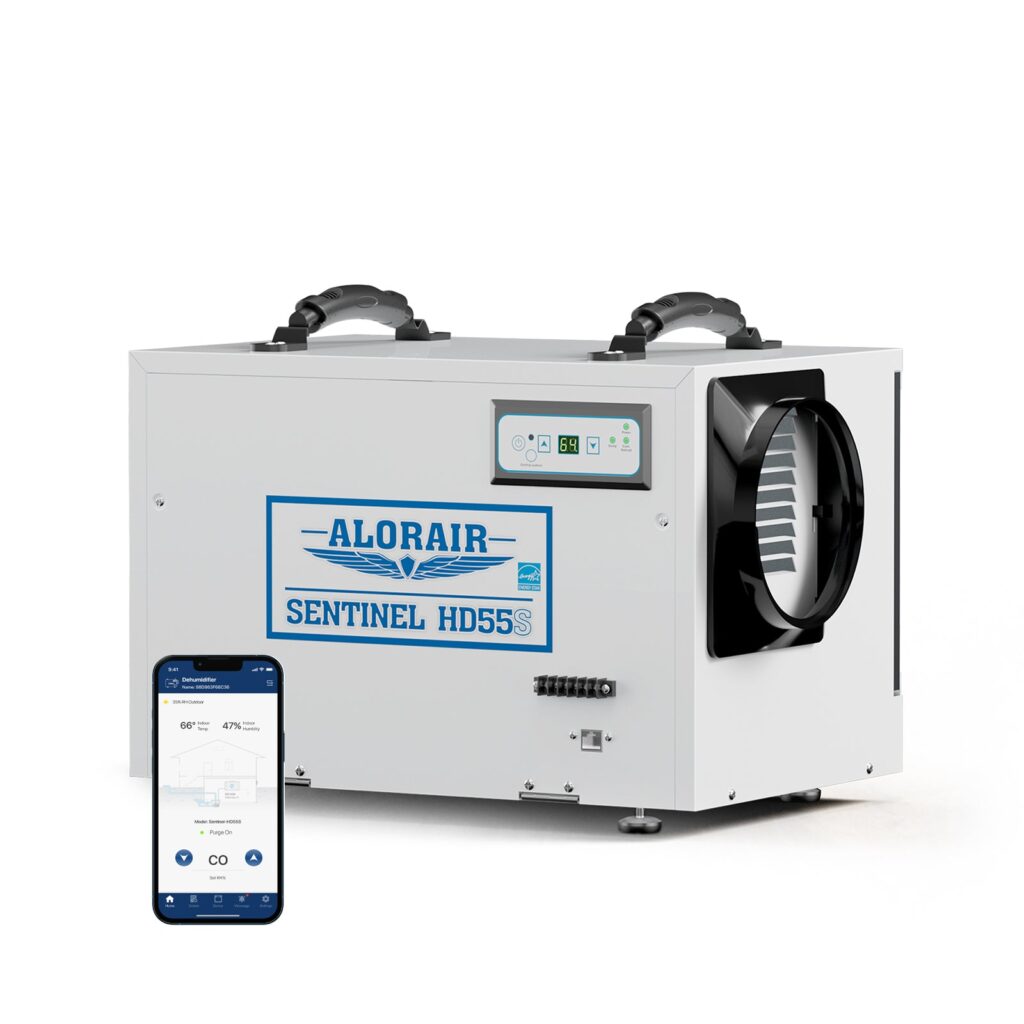
If you want to check humidity from your phone, AlorAir also makes a White WiFi version in the same mid-size class (about 1,300 square feet; 55 pints per day AHAM). Like the Gold, it uses a gravity drain rather than a built-in pump, so you still need a drain or sump lower than the unit. The difference is remote monitoring and control through AlorAir’s app.
Check current price on the AlorAir Sentinel HD55S White WiFi
Larger or persistently damp spaces: Sentinel HDi90 with built-in pump
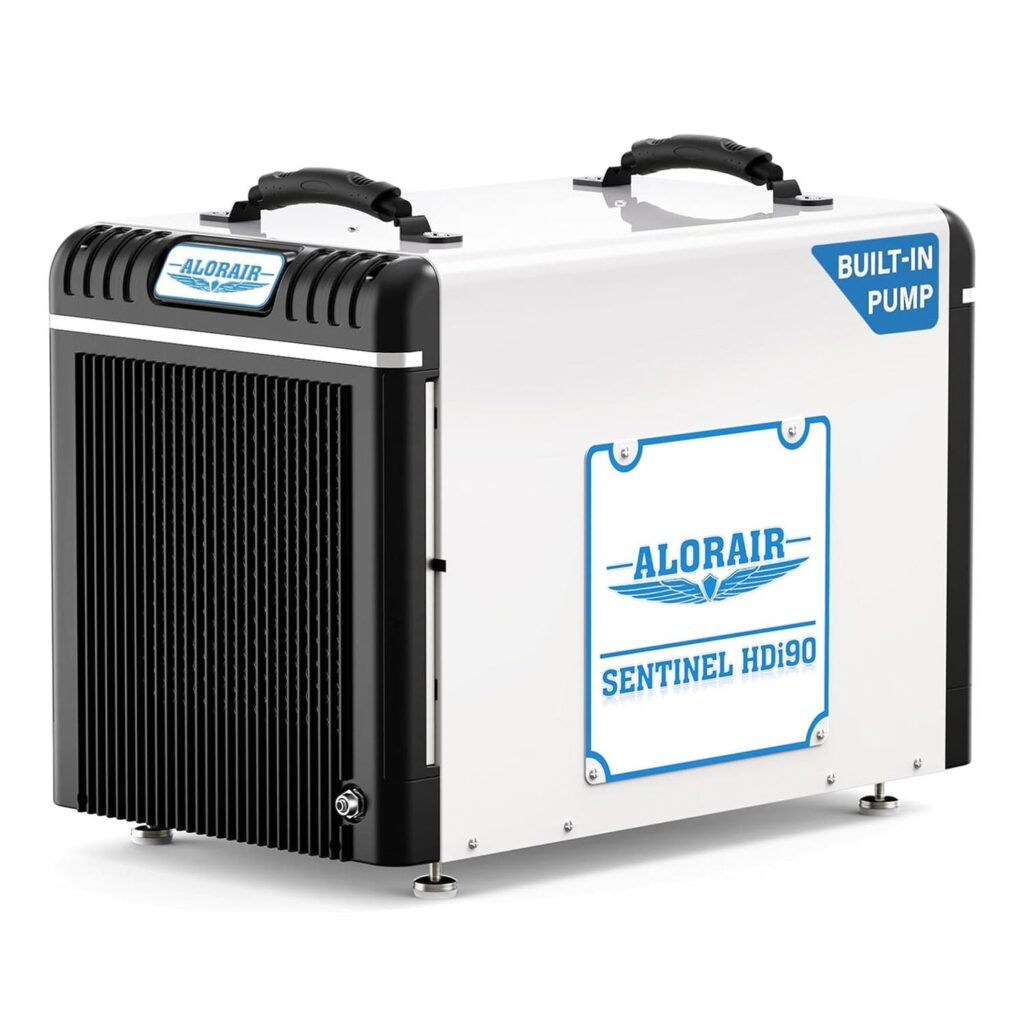
AlorAir rates the HDi90 for spaces up to about 2,600 square feet, at 90 pints per day (AHAM), with a built-in pump. This is the model to look at for a large basement or a crawl space that stays damp even after the outside water issues are addressed. The version linked here is not WiFi. Both this built-in-pump model and AlorAir’s HDi90 WiFi version with a pump were out of stock when we checked on November 18, 2026; confirm current availability on the product pages.
Check current price on the AlorAir Sentinel HDi90 with built-in pump
Before you install
- Confirm there is a suitable outlet nearby and check AlorAir’s electrical requirements.
- Plan the drain or pump line route before the unit arrives.
- Set the unit off the ground where water could collect.
- Keep the filter clean on the schedule AlorAir recommends.
- Check current specifications, warranty terms, and installation requirements directly with the manufacturer.
If crawl space access is tight, or you would rather not be on your back under the house, a local crawl space or waterproofing contractor can install the unit and look over the space at the same time.
A calmer lower level
A dry basement or crawl space is easy to take for granted and easy to overlook. Start by noticing: the smell, the walls, the humidity reading. Take care of outside water first. Then, if the air is still damp, size a dehumidifier to the space and the drainage you actually have. It is one of the quieter ways to look after a home you plan to stay in for years.