What moving from Trumbull to Southbury taught me about darkness, visibility, and automatic lighting
By John McBride | GenTree Living
Affiliate Disclosure: Some links in this article are affiliate links. GenTree Living may earn a commission if you purchase through them, at no additional cost to you. As an Amazon Associate, GenTree Living earns from qualifying purchases.
The walkway, entrance, and areas around the house did not change when the sun went down. What changed was how easily I could see and use them.
Every fall, we hear the same reminders: turn the clocks back, check the smoke alarms, and prepare for shorter days.
They are good reminders. But this year, moving from Trumbull to Southbury made me notice something I had not expected: darkness can change the way we use our home.
More stars and less light
Pam and I enjoy seeing more stars and living with less light pollution. But when I began walking the dog after sunset, the route back to the house felt noticeably darker than it had before.
So I installed dusk-to-dawn LED bulbs in two outdoor locations.
They turn on automatically as daylight fades and turn off when morning returns. I do not have to reset a timer as sunset changes or remember to flip a switch before leaving the house.
The lights help illuminate my way when I leave with the dog and when I return. They also make the entrance, steps, and walking route easier to see for anyone arriving after dark.
It was a small change, but it changed how we use the outside of our home.
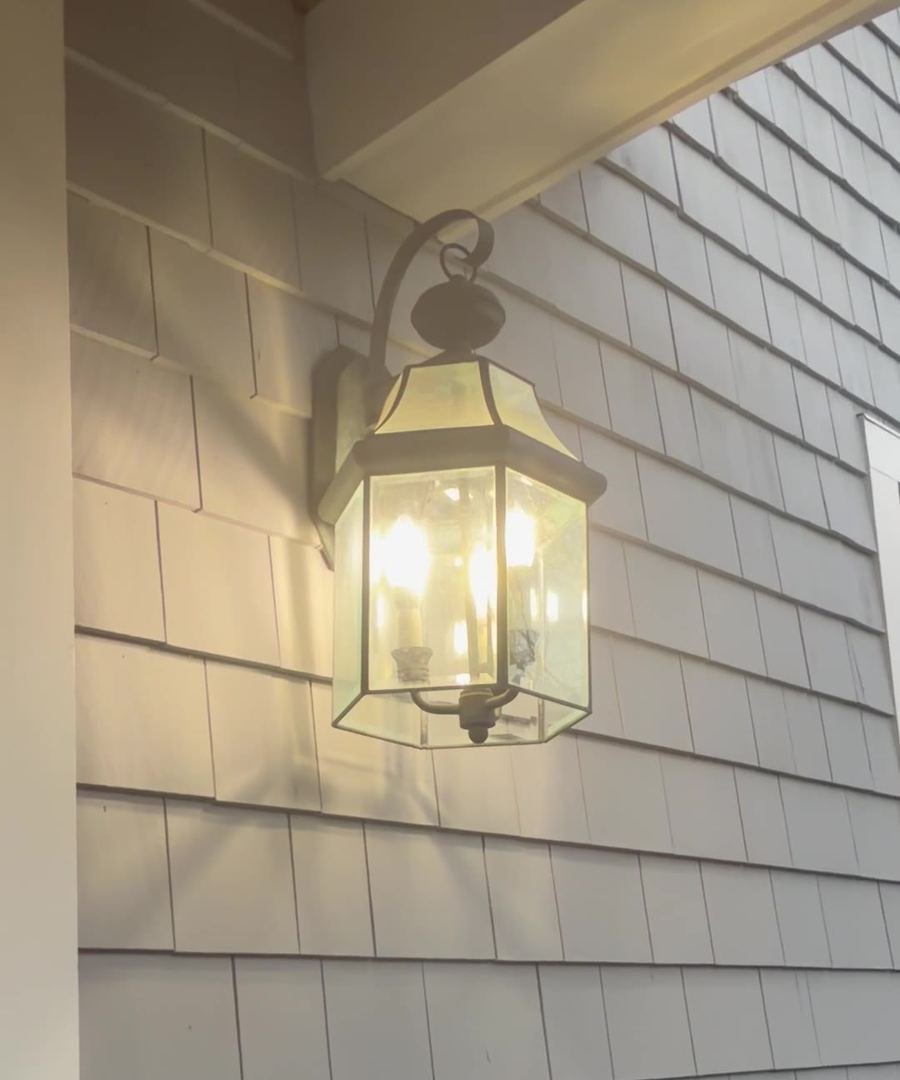
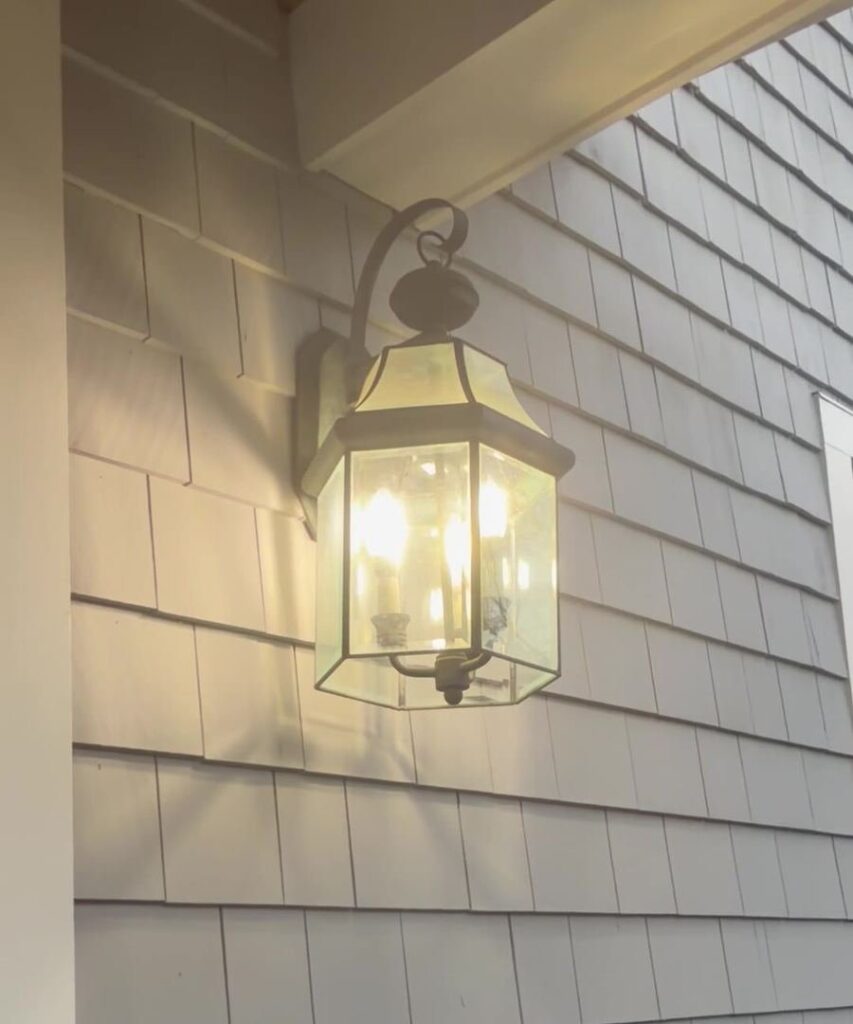
The bulbs in that lantern are EcoSmart dusk-to-dawn LEDs. I could not verify the exact package I bought on Amazon, so I have not linked to it here. If you shop for your own, the details below matter more than the brand name on the box.
Start where everyday life happens
Automatic lighting can be useful both outside and inside the home. Dusk-to-dawn lighting provides steady illumination at entrances and along frequently used outdoor routes. Indoors, motion-activated lights can add light along hallways, stair approaches, and other familiar paths without requiring someone to search for a switch in the dark.
Not every useful home improvement needs to be complicated. Sometimes it begins with noticing a repeated inconvenience and allowing the home to respond automatically.
Why dusk-to-dawn lighting is different
A dusk-to-dawn bulb contains a small light sensor, called a photocell. When the surrounding light falls below a certain level, the bulb switches on. When daylight returns, it switches off.
In a compatible fixture, this can be a simple improvement because the existing bulb may be replaced without installing a new fixture or changing the wiring.
Modern LED bulbs use relatively little electricity compared with older incandescent bulbs. An 8- to 10-watt LED operating for an average of 12 hours per night uses approximately 35 to 44 kilowatt-hours over a year. The actual cost depends on the household’s electric rate, the bulb wattage and the number of hours it operates.
What to check before buying a dusk-to-dawn bulb
- The correct bulb base and size. Most standard household fixtures take a medium (E26) base. Many lantern-style fixtures take the smaller candelabra (E12) base. Check the bulb you are replacing or the label inside the fixture, and make sure the new bulb fits inside the glass.
- Lumens, not watts. Lumens describe how much light a bulb gives. About 450 lumens is similar to an old 40-watt bulb, and about 800 lumens is similar to a 60-watt bulb. At an entrance, brighter is not always better, because glare can make steps harder to see.
- Color temperature. This is measured in kelvins (K). Bulbs around 2700K to 3000K give a warm white light close to traditional bulbs. Bulbs around 4000K to 5000K look cooler and bluer.
- Photocell exposure. The sensor has to see daylight. A bulb inside an opaque or deeply shaded fixture, or one that sits near another light, such as a neighbor’s floodlight, may turn on and off at the wrong times.
- Fixture compatibility. Some LED bulbs are not rated for fully enclosed fixtures, where heat builds up. If your fixture is closed on all sides, look for a bulb the manufacturer says is suitable for enclosed fixtures.
- The proper location rating. A damp-location rating suits covered spots, such as a porch ceiling or a light under a deep overhang. Where rain or snow can reach the bulb or fixture directly, look for a wet-location rating.
- The switch it is on. Dusk-to-dawn bulbs are generally not meant for dimmers, timers or some smart controls. Leave the wall switch on and let the sensor do the work.
Read the manufacturer’s fixture and installation requirements before purchasing. The package and the fixture label usually answer most of these questions.
“As a REALTOR®, I dreaded the end of daylight saving time. Buyers often couldn’t see a home until after work, when it was already dark. The listings that stood out had dusk-to-dawn bulbs or a fresh post-top light.”
Sometimes the bulb is not the problem. If the lantern on top of a lamp post is worn out, the whole head can be replaced with one that has the light sensor built in, so an ordinary bulb will do. One example is the PARTPHONER Dusk to Dawn Outdoor Post Light. PARTPHONER says this black die-cast aluminum and clear-glass lantern turns on at dusk and off in daylight, takes a standard medium-base bulb (not included), fits a 3-inch post and comes with a pier mount base for a pillar. The listing calls it waterproof but does not state a wet-location listing, so check the label on the fixture before you install it in the open. Measure your post before you order. It is hardwired, so if you are not comfortable with the wiring, this is a short job for an electrician.
Bring the same idea inside
Outdoor lighting helps someone approach the home. Indoors, the same idea can carry through hallways, stair approaches, mudrooms and nighttime routes.
The goal is not to make every room brighter. It is to place the right amount of light where someone needs to see the next part of the route.
A plug-in motion light can often be moved and tested in several locations before a permanent decision is made. Look for dark gaps, glare, shadows and sudden changes in brightness. A simple place to start is something like the GE Plug-in Motion Sensor Night Light, 2-pack. GE says it turns on only in low light when it senses motion, switches off after about 90 seconds and leaves the second outlet free.
When a hallway or room already has a ceiling light and a wall switch, the switch itself can do the work. In my house, one of the wall switches is a Lutron Maestro Motion Sensor Switch (MS-OPS2-WH). Lutron says it replaces a single-pole wall switch (not three-way), needs no neutral wire if a ground wire is present, and handles LED or CFL bulbs up to 150 watts. It can turn lights on and off automatically or, in vacancy mode, only turn them off after you leave, with a 1-, 5-, 15- or 30-minute delay.
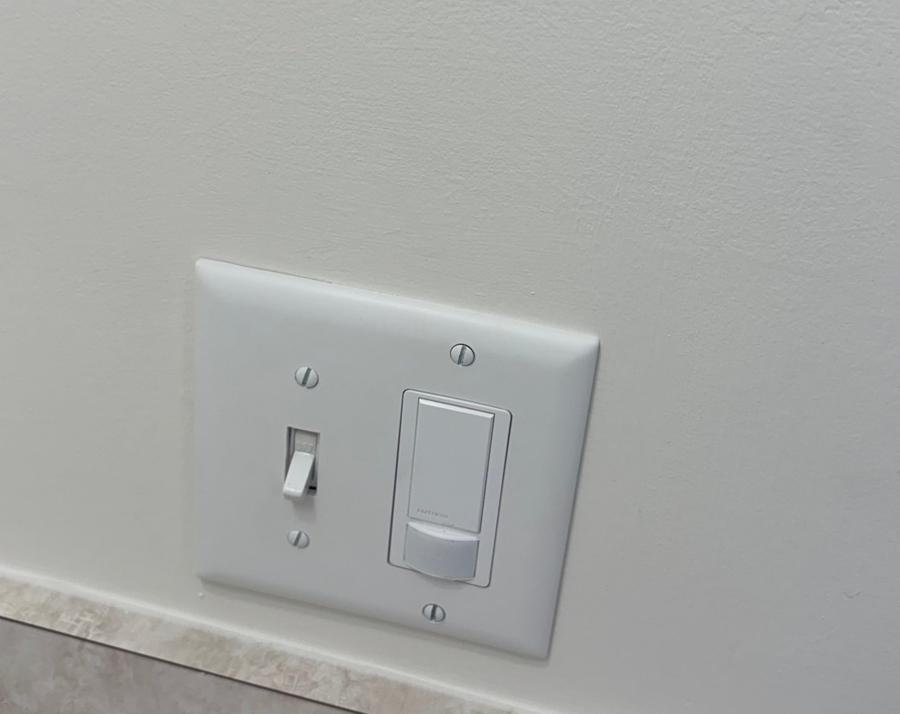
This switch is a hardwired product for indoor, dry locations, so it is not meant for outdoor boxes or wet areas. Check the installation requirements for your wiring and your switch box before buying, turn off the power at the breaker before any work, and consider having a qualified electrician install it.
For a hallway or closet lit from the ceiling, the sensor can also be built into the light. I have a HALO HLCE 6-Inch LED Motion Sensor Ceiling Light in my house. HALO says this flush-mount light turns on when you enter and off when you leave, offers five color temperatures from 2700K to 5000K, works with compatible dimmers, and is ENERGY STAR certified. HALO’s installation instructions describe it as damp-location listed for covered ceilings only, so it belongs indoors or under a covered ceiling, not where rain reaches it. It wires into a standard ceiling junction box, so the same breaker-and-electrician advice applies.
Light reveals the route. Support helps along the way.
Lighting is only one part of how a home supports everyday life. Better visibility can also help us notice where someone naturally reaches for stability.
If someone regularly reaches for a towel bar, sink edge, wall or piece of furniture, the home may be showing where properly installed support should be considered.
A towel bar is designed to hold towels. It is not designed to support a person’s weight.
In the shower shown here, grab bars provide dependable support where ordinary bathroom fixtures were never intended to carry a person’s weight. Light helps someone see the route; properly selected and installed support gives the hand a reliable place to go.
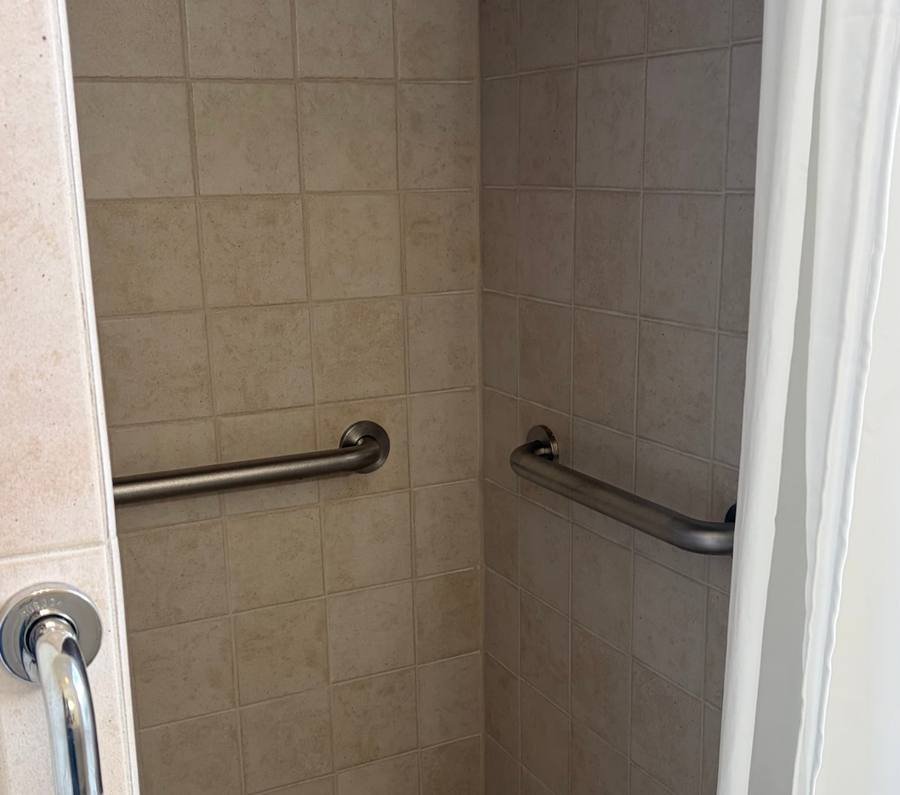
An appropriately selected and installed grab bar can provide support without making the home feel institutional. Location, wall structure, installation and the needs of the person all matter.
Before choosing any lighting or support product, consider the fixture, location, installation requirements, and the people who use the space. When placement depends on how someone moves through the home, an occupational therapist or another qualified professional may be the right person to ask.
The bars in the photo are plain grab bars. If you would like something that looks more like finished bathroom hardware, one option is the Grabcessories 20″ Arched Contemporary Grab Bar from LiveWell. LiveWell says it is a 1.25-inch stainless steel bar with rubber grips, rated to 500 pounds when installed according to its instructions.
Read Bathroom Safety for Aging in Place: Grab Bars, Shower Chairs, and Raised Toilet Seats.
Introducing Thriving in Place
Lighting and grab bars may appear to be very different. What connects them is the way they help a home respond to everyday life.
That is the purpose of a new GenTree Living category: Thriving in Place.
Thriving in Place will explore practical products, home features, and informed decisions that support visibility, comfort, independence, and everyday life at home.
The goal is not to fill a home with products. It is to notice where a thoughtful product or home feature can answer a real question about how the home is being used.
A simple walk after dark
Walk from the driveway or sidewalk to the entrance after sunset. Then walk one familiar indoor route.
Notice where the light begins and ends. Look for shadows, glare, changes in floor level and anything that narrows the path. Notice where a hand naturally reaches.
You may find that the first improvement is not a major project. It may begin with changing one lightbulb.
Coming soon
John and Edyta introduce GenTree Roots — Aging-in-Place Home Support and Coordination.
We protect the home so the home can continue protecting the people who live in it.