Affiliate Disclosure: GenTree Living may earn a commission if you buy through links on this page, at no extra cost to you. As an Amazon Associate, GenTree Living earns from qualifying purchases.
Researched and written for GenTree Living. Edited by John McBride, Connecticut REALTOR® since 1987 and Senior Home Safety Specialist (SHSS®). This is a buying guide based on manufacturer specifications and public safety guidance, not a hands-on product test, and it is not medical advice.
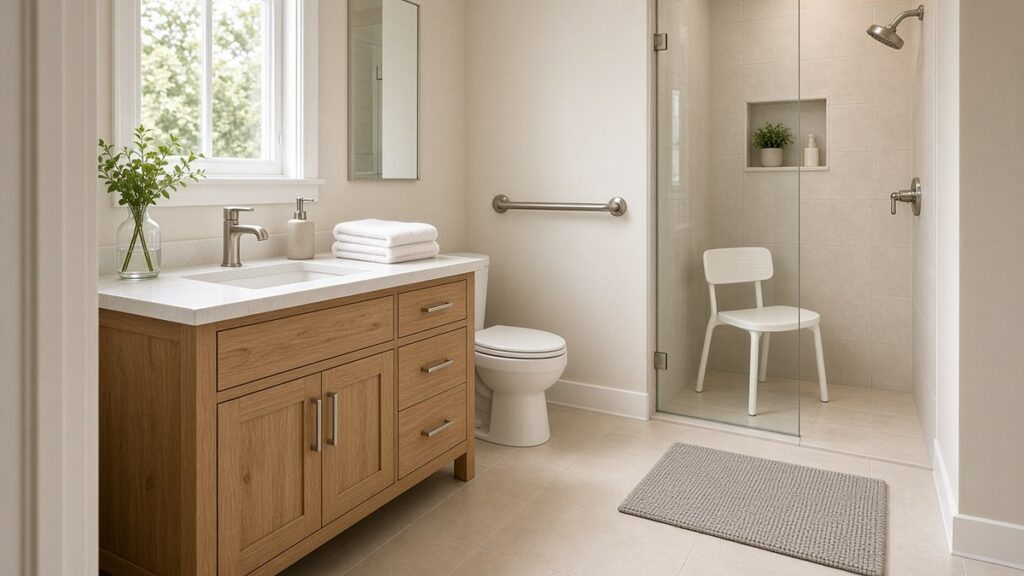
The bathroom is small, hard-surfaced, and often wet, and it is the room most of us use several times a day without a second thought. That combination is why it shows up on almost every home safety checklist. The good news is that the most useful changes are modest: something solid to hold, somewhere safe to sit, and a little more height where bending is hardest.
Falls are common, not rare. According to the CDC, more than one in four adults age 65 and older falls each year, fewer than half tell their doctor, and falling once doubles the chance of falling again. The CDC lists home hazards among the risk factors that can be changed. The National Institute on Aging recommends grab bars near toilets and on both the inside and outside of the tub and shower, and nonskid mats or strips on any surface that may get wet.
This guide walks through the bathroom aids worth considering, what to look for in each, and a few well-reviewed options. It is written for adults 55 and older and for the adult children who help them plan ahead.
Quick Picks
- Grab bar (installed): Vive Metal Grab Bar, or Moen Home Care 24-inch Stainless Grab Bar on Amazon
- Shower chair: Vive Shower Chair with Arms, or Drive Medical Shower Chair with Back on Amazon
- Tub entry: Vive Tub Transfer Bench
- Raised toilet seat: Vive Toilet Seat Riser with Arms, or Carex E-Z Lock Raised Toilet Seat with Handles on Amazon
- Toilet rail: Vive Toilet Safety Rail
- Non-slip mat: Vive 26-inch Oval Bath Mat, or Gorilla Grip Bath Tub Shower Mat on Amazon
Prices change often, so we have not listed them here. Check current price.
Start With a Walk-Through
Before buying anything, watch how the bathroom is actually used. Where does a hand reach for support today: a towel bar, the sink edge, a shower door? Those are the places that need something built to hold weight. Towel bars and soap dishes are not designed for that job. The CDC’s STEADI resources, including its Check for Safety home checklist, are a helpful, free place to start.
If someone has already fallen, or is recovering from surgery, the NIA notes that a doctor may suggest a visit from an occupational therapist, physical therapist, or nurse, who can look at the home and advise on changes. That advice is worth more than any product list, including this one.
Grab Bars: The Foundation
A grab bar is the single most useful bathroom change for many households, and it is only as good as its installation. The federal 2010 ADA Standards (written for public buildings, but a useful reference at home) call for round grab bars between 1¼ and 2 inches in diameter, mounted 1½ inches from the wall, with horizontal bars set 33 to 36 inches above the floor, and built to withstand 250 pounds of force. A home does not have to meet ADA rules, but those numbers describe a bar that is comfortable to grip and genuinely strong.
Vive Metal Grab Bar
The Vive Metal Grab Bar is stainless steel and comes in several lengths and finishes. Vive rates it to support up to 440 pounds and says it can be mounted vertically, horizontally, or diagonally. It includes hardware for fiberglass, acrylic, drywall, and plaster walls, and Vive notes that ceramic tile needs additional mounting hardware. If you are unsure what is behind the wall, this is a job for a handyman or contractor. Check current price.
Alternative: Moen Home Care 24-inch Grab Bar
The Moen Home Care 24-inch Stainless Grab Bar on Amazon is a well-known option from a major plumbing brand, in a longer length that suits the long wall of a tub or shower. Check current price.
A caution about suction-cup bars: bars that attach with suction cups are best treated as balance aids, not something to put your full weight on. For support while sitting, standing, or stepping over a tub wall, choose a bar that is screwed into solid framing or properly rated anchors.
Shower Chairs and Tub Transfer Benches
Standing in a wet shower asks a lot of balance and leg strength. A seat lets someone wash at their own pace and rest when needed. The right style depends on how the person gets into the bathing area.
Vive Shower Chair with Arms
For walk-in showers or roomy tubs, the Vive Shower Chair with Arms has a wide seat rated to 300 pounds, padded armrests to push against when sitting down or standing up, rubber anti-skid tips, an aluminum frame that resists rust, and an adjustable seat height. Armrests matter more than they look: they give hands a steady place to land. Check current price.
Alternative: Drive Medical Shower Chair with Back
The Drive Medical Shower Chair with Back and Suction Feet is one of the most widely reviewed shower chairs on Amazon, with a backrest for support while seated. Check current price.
Vive Tub Transfer Bench
Stepping over a tub wall is one of the riskiest moves in the bathroom. A transfer bench straddles the tub wall so you sit down outside the tub and slide across, keeping your weight supported the whole way. The Vive Tub Transfer Bench has a 400-pound weight capacity, a lightly textured seat, a reversible back and armrest, suction cups on the interior feet, and tool-free assembly. Check current price.
Raised Toilet Seats and Toilet Rails
Most standard toilets sit low. For anyone with stiff knees or hips, or who is recovering from surgery, sitting down and standing up from that height is hard work. A few added inches and something to push against can make a real difference.
Vive Toilet Seat Riser with Arms
The Vive Toilet Seat Riser with Arms adds 3.5 inches of height and has padded aluminum handles. Vive says it is made from crack-resistant composite, holds 300 pounds, fits under your current seat, and comes in standard and elongated sizes. Measure your bowl before ordering. Check current price.
Alternative: Carex E-Z Lock Raised Toilet Seat with Handles
For more height, the Carex E-Z Lock Raised Toilet Seat with Handles on Amazon adds 5 inches. Check current price.
Vive Toilet Safety Rail
If the toilet height is fine but standing up is the hard part, a frame of handles may be enough. The Vive Toilet Safety Rail attaches with the existing seat bolts (no drilling), adjusts from 21.5 to 26.5 inches wide and 26 to 31.5 inches high, fits standard, elongated, and irregular toilets, and supports up to 300 pounds. Check current price.
Non-Slip Mats
The Vive 26-inch Oval Bath Mat uses 167 suction cups, drainage holes, and a lightly textured surface, and it is machine washable. On Amazon, the Gorilla Grip Bath Tub Shower Mat is a larger 35-by-16-inch option. Check current price.
Read the fine print on any suction mat. Gorilla Grip’s own safety note says to secure the suction cups before each use, that the mat attaches only to clean, smooth surfaces, and that it is not for textured or tiled floors. Bath oils can make any mat slippery. For textured tubs or tile, adhesive non-slip strips may be the better choice.
What to Look For
- Weight capacity with a comfortable margin above the user’s weight.
- Secure mounting. Grab bars screwed into framing or rated anchors, not suction cups, for weight-bearing support.
- Grip size and texture. A bar about 1¼ to 2 inches across is easier for most hands, especially with arthritis.
- Adjustability. Seat heights and rail widths that can be set to the person and the room.
- Rust-resistant materials such as aluminum and stainless steel.
- Fit. Measure the tub wall, toilet bowl shape, and floor space before ordering.
- Ease of cleaning, so the aid stays in use.
Beyond Products: Simple Habits That Help
- Leave a bathroom light on at night or use a night light that turns on automatically in the dark, as the NIA suggests.
- Keep soap, shampoo, and towels within easy reach so no one has to stretch or twist.
- Stand up slowly. The NIA notes that getting up too quickly can cause blood pressure to drop and leave you feeling wobbly.
- Wipe up water on the floor right away.
Frequently Asked Questions
Do I need a professional to install grab bars?
Not always, but a grab bar must be anchored to something that can hold a person’s weight. If you are not confident finding studs or working with tile, hire a handyman or contractor. A poorly installed bar can be worse than none, because people trust it.
Shower chair or tub transfer bench: which one?
If the person can step into the tub or shower safely and just needs to sit, a shower chair is usually enough. If stepping over the tub wall is the problem, a transfer bench lets them sit first and slide in.
How high should a raised toilet seat be?
It depends on the person’s height and the toilet. The goal is for hips to be level with or a little higher than the knees when seated, so standing takes less effort. An occupational therapist can help find the right height.
Where can I get help paying for home changes?
The NIA notes that many state and local governments run home modification programs. Search the Eldercare Locator or call 800-677-1116 to find your local Area Agency on Aging.
Living Well Begins at Home. Small changes in the bathroom can help someone stay independent and confident in the home they love. Questions? Reach us at smartliving@gentreeliving.com.